
You’ve had your bloodwork done. The doctor says your levels are “normal.” But you’re still tired in a way that sleep doesn’t fix. Your hair is thinning. You’re cold when everyone else is comfortable. Maybe your mood feels flatter than it used to, or your weight has shifted without any real change in how you eat or move. It’s easy to start wondering if you’re imagining it, or if this is just what getting older feels like.
It’s worth asking whether your thyroid is part of the picture. This small gland influences nearly every system in the body, and when its function shifts even slightly, the symptoms can look like almost anything else. Understanding how it works, and what can throw it off course, is foundational to making sense of what your body might be telling you.
What the Thyroid Is and What It Does
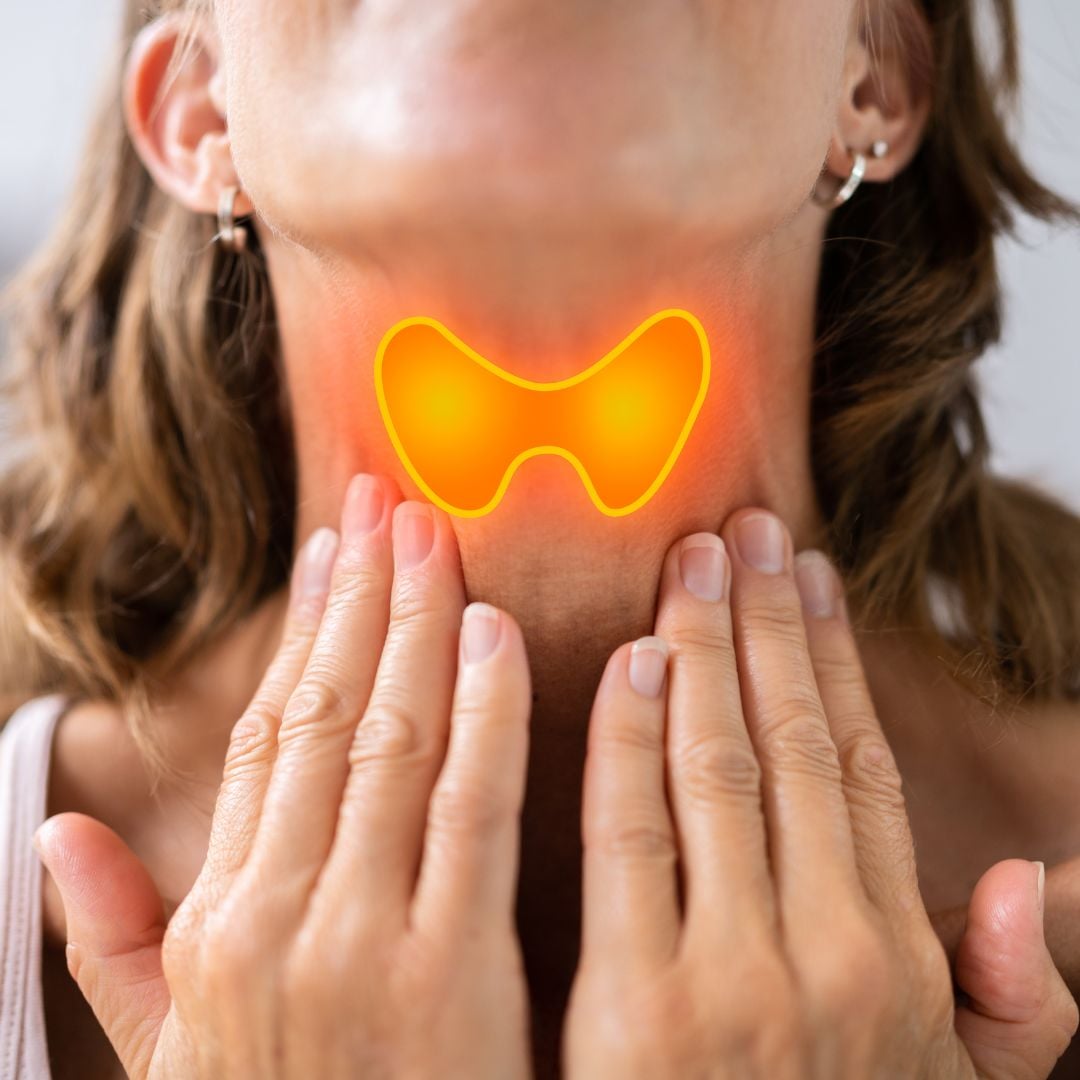
The thyroid is a small, butterfly-shaped gland that sits at the base of the neck. Despite its size, it produces hormones (primarily T4 and T3) that regulate metabolism in nearly every cell in the body. These hormones influence how efficiently you produce energy, how your body manages temperature, how your heart beats, and even how clearly you think.
Because thyroid hormone touches so many systems at once, even a small disruption rarely stays contained to one symptom. It tends to show up as a cluster: fatigue alongside dry skin, brain fog alongside constipation, anxiety alongside a racing heart. That’s part of why thyroid imbalances are so often missed or dismissed.
When the Thyroid Slows Down: Hypothyroidism
Hypothyroidism happens when the thyroid isn’t producing enough hormone to keep the body’s systems running at pace. It’s one of the most common thyroid imbalances, and it can develop gradually enough that the symptoms feel like a slow drift rather than a clear before-and-after.
Common signs include:
- Persistent fatigue, even with adequate sleep
- Unexplained weight gain or difficulty losing weight
- Cold intolerance
- Thinning hair or dry skin
- Constipation
- Brain fog or low mood
It’s also worth knowing about subclinical hypothyroidism, where lab values sit in a borderline range but symptoms are still very real. This is a place where a more complete thyroid panel, rather than a single number, can make a meaningful difference.
When the Thyroid Speeds Up: Hyperthyroidism
Less common, but just as important to understand, is hyperthyroidism: when the thyroid produces more hormone than the body needs. This pushes metabolism into overdrive.
Common signs include:
- Anxiety or a racing heart
- Unintended weight loss
- Heat intolerance
- Difficulty sleeping
- Tremors or restlessness
Both directions, too little hormone or too much, reflect the same underlying truth: this gland needs to be regulated with precision, and small shifts have noticeable effects.
The Autoimmune Layer
Much of the thyroid imbalance seen today isn’t a problem with the gland in isolation. It’s an autoimmune process. Hashimoto’s thyroiditis, where the immune system gradually attacks thyroid tissue, is the leading cause of hypothyroidism in the United States. Graves’ disease, the autoimmune driver behind most hyperthyroidism, works in a related but opposite way, overstimulating the gland rather than damaging it.
This distinction matters clinically. A standard TSH test won’t reveal an autoimmune process underway. Thyroid antibody testing (TPO antibodies, thyroglobulin antibodies, and TSI for Graves’) can identify autoimmunity years before it shows up as a clear hormone imbalance, which opens the door to addressing it earlier and more thoroughly.
A Sensitive Gland in a Toxic World
The thyroid is unusually vulnerable to environmental exposures, and this isn’t speculation. It’s documented in the research.
Endocrine-disrupting chemicals (EDCs) are well established as thyroid disruptors. Reviews of the scientific literature point to PCBs as having particularly strong evidence, with emerging evidence for phthalates, bisphenol A (BPA), brominated flame retardants, and perfluorinated chemicals (PFAS). These compounds show up in plastics, personal care products, and household items more often than most people realize.
Heavy metals also play a documented role. Research on cadmium and lead, in particular, shows meaningful associations with thyroid disorders, with cadmium appearing to act through oxidative stress and lead showing stronger ties to autoimmune thyroid activity. Heavy metals also tend to accumulate in thyroid tissue more than in many other organs, which makes ongoing low-level exposure worth paying attention to over time.
Halide compounds, structurally similar to iodine, can also interfere with how the thyroid functions. Perchlorate (found in some water supplies and as an industrial byproduct) competes directly with iodine for uptake into the thyroid. Fluoride’s relationship to thyroid function is less settled and appears to matter most at higher exposure levels than what’s typical in fluoridated municipal water, but it’s a piece worth being aware of as part of the broader picture.
None of this means every symptom traces back to toxin exposure. But it does mean environmental load deserves a place in the conversation, especially for anyone who isn’t finding answers through standard testing alone.
The Thyroid’s Web of Connections
The thyroid doesn’t operate as an isolated gland. It’s in constant conversation with other systems in the body.
- The hypothalamus-pituitary-thyroid (HPT) axis. The thyroid takes its cues from the brain. The hypothalamus and pituitary gland send signaling hormones that direct thyroid output, so a disruption anywhere along that chain, not just in the thyroid itself, can throw the whole system off.
- The HPA axis and adrenal connection. Chronic stress and elevated cortisol can suppress the conversion of T4 into active T3, the form your cells actually use. A nervous system stuck in fight-or-flight makes it harder for the thyroid to do its job well, even if the gland itself is healthy.
- Sex hormones. Estrogen affects thyroid-binding globulin, which changes how much usable thyroid hormone is circulating. This is part of why perimenopause and menopause so often bring thyroid issues to the surface that were quietly being compensated for before.
- The gut. A significant portion of T4-to-T3 conversion happens in the gut. Gut inflammation and imbalance can both interfere with this conversion and contribute to the autoimmune activity that underlies Hashimoto’s and Graves’.
What Else Shapes Thyroid Health
From a functional medicine perspective, the thyroid is best understood as a reflection of the whole body’s state, not an isolated organ to treat on its own. A few factors consistently influence its function:
- Nutrient status, including selenium, zinc, iron, vitamin D, and the right amount of iodine (not too little, not too much)
- Gut health and inflammation, given the gut’s role in hormone conversion
- Chronic stress and how much time the nervous system spends in a parasympathetic, rest-and-digest state
- Sleep quality and circadian rhythm, which influence the hormonal signaling the thyroid depends on
Caring for Your Thyroid
Supporting thyroid health doesn’t require an overhaul. It tends to respond well to the same restorative, intentional habits that support the rest of the body:
- Eat nutrient-dense, whole foods, with attention to selenium- and zinc-rich options
- Reduce unnecessary toxin exposure where it’s realistic to do so (filtered water, fewer plastics, cleaner personal care products)
- Support the nervous system through rest, mindful movement, and time that genuinely feels restorative
- Protect sleep as a non-negotiable, not an afterthought
- Ask for a full thyroid panel, including TSH, free T4, free T3, reverse T3, and thyroid antibodies, rather than relying on TSH alone
Where to Go From Here
If any of this sounds familiar, you’re not alone, and you’re not imagining it. The thyroid is easy to overlook because its symptoms mimic so many other things, but it’s also one of the more answerable pieces of the puzzle once it’s actually investigated. A fuller thyroid panel, paired with a look at the systems surrounding it, often brings more clarity than another round of “your labs are normal” ever could.
At Radiance Functional Medicine, we offer functional medicine and nutrition counseling. We hope that you will allow us to help you heal your gut, balance your hormones, or find a way of eating that helps you thrive! Schedule an appointment to get started. Whether you are looking for a Nutritionist or Functional Medicine Doctor in Denver or your local area, we see patients in person and virtually. Call our office at 303.333.1668 to schedule your Initial Consultation.