

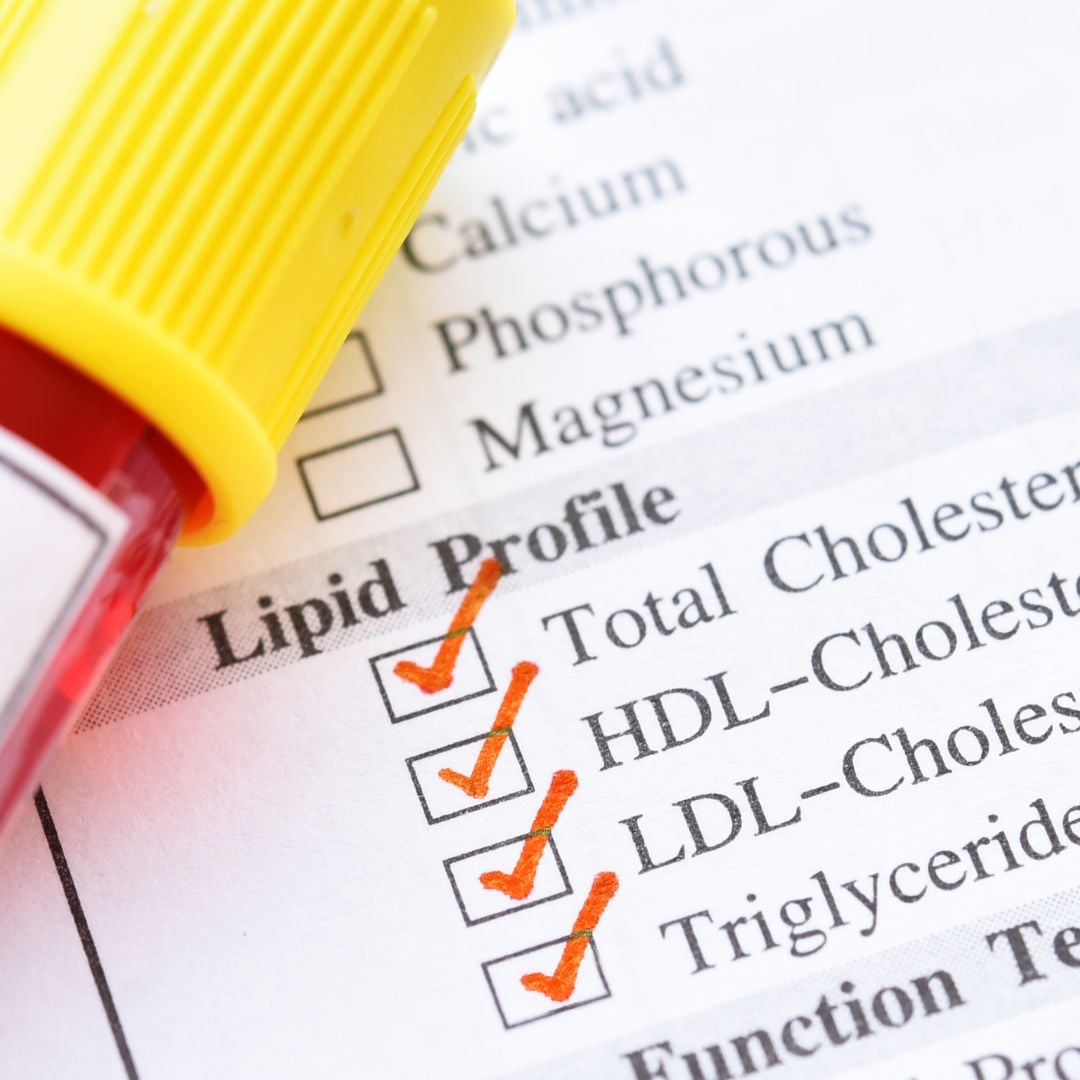
A patient finishes her annual physical feeling good. Her total cholesterol, LDL, HDL, and triglycerides all come back within normal range, her doctor tells her she’s doing everything right, and she goes on with her week without a second thought. She has no reason to wonder whether her father’s heart attack at 52 was more than random family history. However, a normal standard lipid panel does not rule out elevated cardiovascular risk, and a growing body of research points to the value of two additional markers that help assess that risk.
The American College of Cardiology and the American Heart Association released a major update to U.S. cholesterol and lipid guidelines in March 2026. A new cardiology guideline calls for every adult to have their lipoprotein(a), or Lp(a), measured at least once in their lifetime. The same guidelines elevate apolipoprotein B, or ApoB, from a specialty test to a tool for refining risk in specific patients. These are important additions, and it is worth understanding what these markers are, why they matter, and how they fit alongside the testing most people already know.
The Standard Lipid Panel
The basic lipid panel – total cholesterol, LDL, HDL, and triglycerides – has been the standard of care for decades. Each has carried a specific meaning in traditional cardiovascular risk assessment.
- Total cholesterol was long treated as a single, overall gauge of risk, a simple number meant to sum up how much cholesterol was circulating in the blood.
- LDL, often called “bad” cholesterol, has been the primary target of treatment, since higher levels have consistently been linked to plaque buildup in the arteries.
- HDL, known as “good” cholesterol, was thought to work in the opposite direction, clearing excess cholesterol from the bloodstream and offering a protective effect, so higher HDL was long considered reassuring.
- Triglycerides, a different type of fat circulating in the blood, have served as a marker of metabolic health, with elevated levels tied to diet, weight, and blood sugar regulation, and, at high enough levels, to cardiovascular risk.
Together, these four numbers have formed the backbone of cholesterol screening for decades, and each still offers useful information.
What Lp(A) Is
Lp(a) is a cholesterol-carrying particle similar to LDL, but with an extra protein, apo(a), attached to it. That extra protein appears to make Lp(a) more prone to promoting plaque buildup and reducing blood flow, which raises the risk of heart attack, stroke, peripheral artery disease, and aortic stenosis.
Elevated Lp(a) is not rare. It affects roughly one in five people worldwide. Levels are largely set by genetics, and tend to stay stable across a person’s lifetime, which is why testing once is generally enough. It’s important to know that an individual’s cardiovascular risk still depends on other factors like age and blood pressure, so a high number is information, not a verdict.
What ApoB Adds
Apolipoprotein B is the structural protein found on every lipoprotein particle, including LDL, VLDL, and Lp(a). Because each particle carries exactly one ApoB molecule, measuring ApoB gives a direct count of how many atherogenic particles are circulating, regardless of how much cholesterol each one happens to be carrying.
The updated guideline recommends ApoB testing, particularly for people with type 2 diabetes, elevated triglycerides, metabolic syndrome, or existing cardiovascular disease. In these groups, ApoB has repeatedly shown itself to be a more accurate predictor of cardiovascular events than LDL-C alone, which means a patient can look fine on paper and still be carrying more risk than the LDL number implies.
Unlike Lp(a), ApoB does respond to lifestyle changes: reducing saturated fat and refined carbohydrates, adding more soluble fiber from foods like oats and beans, and staying consistent with both aerobic and resistance exercise have all been shown to lower ApoB meaningfully.
One More Piece of the Puzzle: ApoA1
There is a third marker worth knowing about, even though it isn’t included in the 2026 guideline update: apolipoprotein A1, or ApoA1. Where ApoB is the structural protein found on artery-clogging particles, ApoA1 is its counterpart on HDL, the particle responsible for gathering excess cholesterol from the arteries and tissues and carrying it back to the liver for clearance.
Comparing the two, as a ratio of ApoB to ApoA1, gives a single number reflecting the balance between artery-clogging particles and the protective capacity working against them. Some integrative practice use this ratio as a signal worth watching, since it captures HDL’s protective function in a way the standard HDL number, on its own, does not.
ApoA1 and the ApoB/ApoA1 ratio remain outside current mainstream guidelines, so they are best understood as an additional layer some providers use to round out the picture. Unlike Lp(a), ApoA1 and HDL function do respond to movement, sleep, and metabolic health, so this ratio can be a useful way to see that lifestyle changes are working, even when Lp(a) itself stays fixed.
What To Do With This Information
A high ApoB or Lp(a) is not something to fear. It is something to act on, and there is a clear, practical path forward.
- Ask for Lp(a) testing at least once. It is a simple blood draw and does not require fasting.
- Ask about ApoB testing if you have diabetes, elevated triglycerides, metabolic syndrome, existing cardiovascular disease, or a standard lipid panel that doesn’t match your family history.
- If your Lp(a) is high, encourage testing for close family members, parents, siblings, and children, since the condition is inherited and early awareness benefits the whole family.
- Manage the factors that compound risk – blood pressure, blood sugar, and inflammation – particularly if your ApoB or Lp(a) is elevated.
- Focus on what is modifiable. Lp(a) itself does not respond to diet or lifestyle changes, but overall cardiovascular risk does.
- A heart-healthy way of eating centers on whole, minimally processed foods: plenty of vegetables and fruit, quality protein, and healthy fats from sources like olive oil, nuts, seeds, and fatty fish, while limiting refined carbohydrates, added sugars, and ultra-processed foods.
- Regular movement generally means aiming for at least 150 minutes of moderate activity a week, such as brisk walking, cycling, or swimming, along with two sessions of strength training, though any consistent, enjoyable movement supports cardiovascular health.
- A healthy weight is better reflected by waist circumference and overall body composition than by a number on the scale. Fat carried around the abdomen is more strongly linked to cardiovascular risk than total weight alone.
- Avoiding tobacco products matters because smoking damages the lining of the blood vessels and speeds up plaque buildup, adding directly to whatever risk ApoB or Lp(a) already represents.
- Prioritizing seven to nine hours of restful sleep each night supports healthy blood pressure and blood sugar regulation, both of which play a role in long-term cardiovascular risk.
Together, these lower the total risk load a person carries, independent of their Lp(a) number.
The Full Picture
Atherosclerosis is increasingly understood as a lipid-driven inflammatory process, not simply a matter of one number being too high. The most useful question isn’t only “what is my cholesterol,” but “what is happening in my arteries, and what’s driving it.” Looking at ApoB and Lp(a) alongside markers of inflammation and metabolic health gives a more complete, personalized answer than the standard panel alone can.
Advanced lipid testing has been part of a more thorough cardiovascular workup in functional and integrative medicine for some time, precisely because a standard panel can look reassuring while missing risk. The 2026 guideline update is best understood as a more complete way of assessing cardiovascular risk, one that a growing number of patients and providers were already asking for.
Knowing your ApoB and Lp(a) gives you and your care team a clearer, more accurate picture of your actual cardiovascular risk, one that a standard panel alone cannot provide. If you have a family history of early heart disease, or a lipid panel that has never quite matched your family story, it is worth asking your provider about testing for both.
At Radiance Functional Medicine, we offer functional medicine and nutrition counseling. We hope that you will allow us to help you heal your gut, balance your hormones, or find a way of eating that helps you thrive. Schedule an appointment to get started. Whether you are looking for a nutritionist or functional medicine doctor in Denver or your local area, we see patients in person and virtually. Call our office at 303.333.1668 to schedule your Initial Consultation.